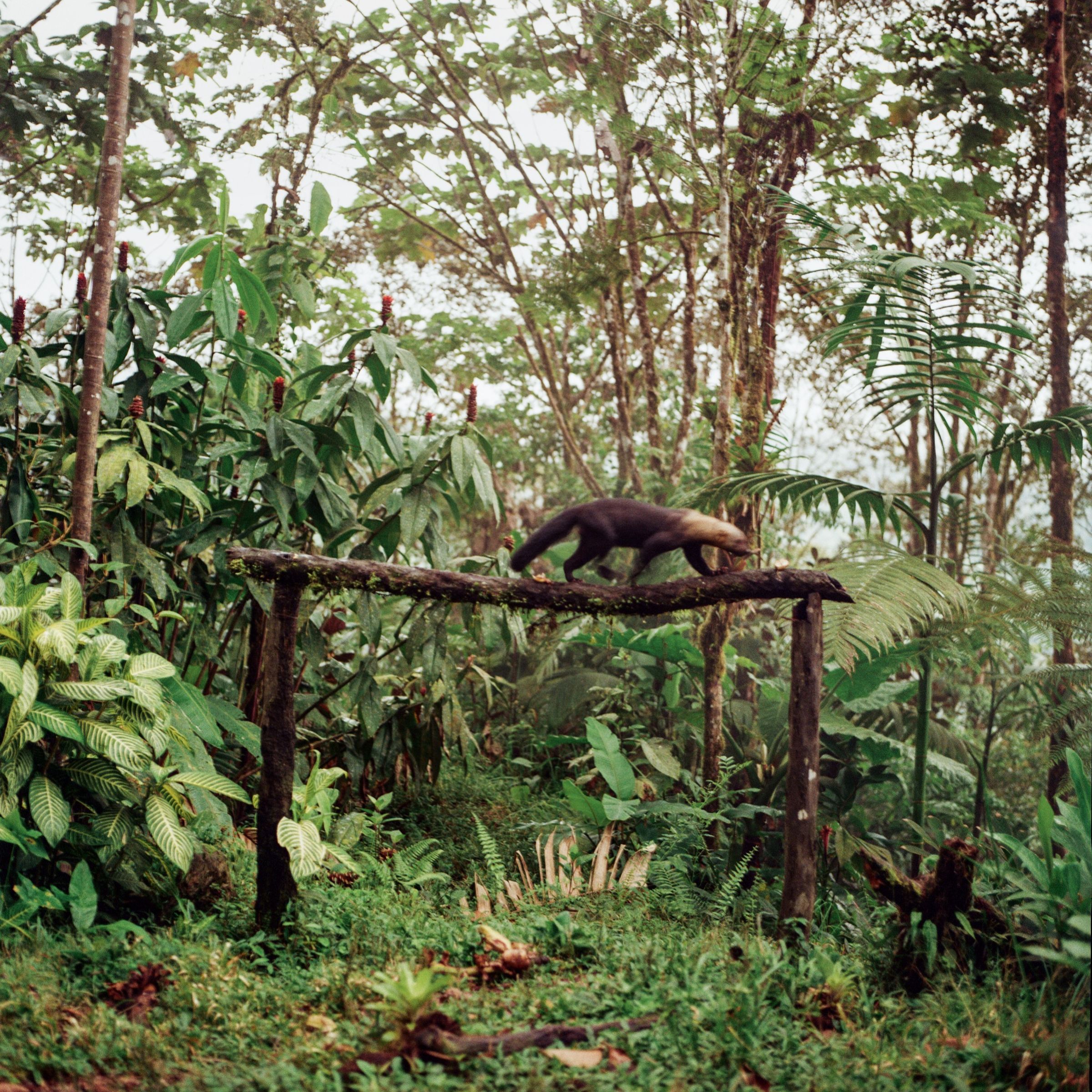
As we drove into the Mashpi-Tayra Reserve, in the Chocó Cloud Forest on the western slopes of the Andes, after a three-hour, equator-crossing ride from Quito, the first thing that struck me was the size of the leaves: taller than my research assistant, my nine-year-old daughter. The air was alive with life: a cacophonous chorus as enveloping as the clouds.
They say that it never stopped raining in Chocó, even through ice ages and droughts. According to the refugia hypothesis, for millions of years these cloud forests have been in dialogue with the Pacific Ocean, offering a wet refuge for Andean birds, orchids, frogs, plants and insects to survive, thrive and diverge, like Jorge Luis Borges’ labyrinth described in which “time forks perpetually toward innumerable futures”.