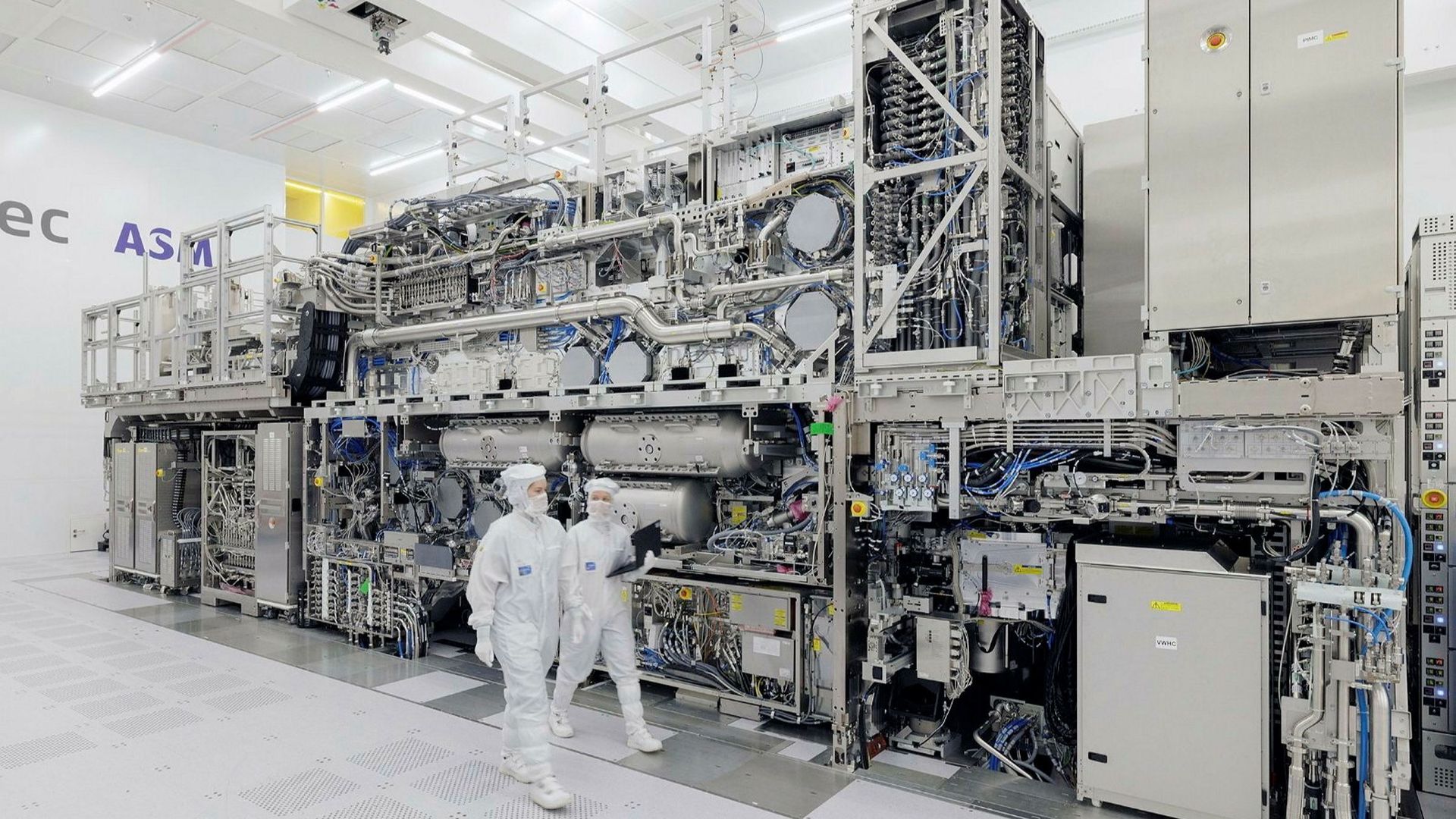
It was quite the Christmas present. In December, the Dutch technology company ASML started shipping 250 crates to Oregon to install a €350mn machine for the US chipmaker Intel. The Twinscan Exe: 5000, to give the machine its full name, is probably the most complex piece of equipment ever built. Weighing as much as two Airbus A320 jets, it took a decade to develop and will require 250 engineers to make it operational next year.
Its purpose? To “print” tiny 8-nanometer lines on a silicon wafer, compared with the 13-nanometers in earlier models. That sounds like a microscopic difference and indeed it is, but it has giant implications. By deploying the latest iteration of its extreme ultraviolet lithography technology, ASML can enable 2.9 times more transistors to be packed on to a chip, significantly improving computing power, memory and energy efficiency.